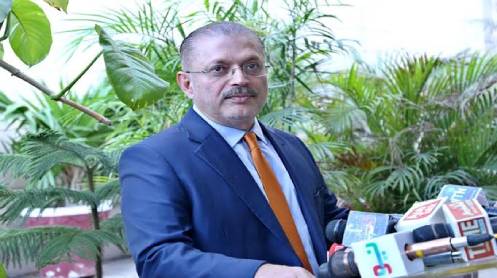
KARACHI: Sindh Senior Minister for Information, Transport and Mass Transit Sharjeel Inam Memon has termed prolonged electricity loadshedding in the province a serious governance failure, accusing power distribution companies of incompetence and mismanagement and calling for stronger accountability.
Thank you for reading this post, don't forget to subscribe!Speaking in the Sindh Assembly on Friday, Memon said HESCO, SEPCO and K-Electric had failed to provide basic electricity services to consumers in their respective areas despite being responsible for power distribution.
“Loadshedding is the highest example of governance failure in Pakistan,” he said, adding that the issue had repeatedly been raised in the provincial assembly and that lawmakers from all political parties agreed that the distribution companies were failing to provide adequate services.
Memon questioned why an effective mechanism had not been developed to permanently resolve the electricity crisis, particularly when power distribution companies were also generating profits.
He said simply establishing mechanisms for bill recovery would not solve the problem and stressed the need for an effective system at the grassroots level.
The minister said authorities should identify consumers who were paying their electricity bills and those who were not. While action should be taken against defaulters, he stressed that consumers who regularly pay their bills must be provided with basic electricity services.
18-hour loadshedding in extreme heat
Memon said the situation became particularly unbearable during summer, when temperatures in some parts of Sindh reached 50 degrees Celsius.
“In some areas, there is loadshedding for 18 hours. How can it be acceptable to subject people to such suffering in extreme heat?” he questioned.
He called for the issue to be raised in both the National Assembly and Senate, saying members of his party were already highlighting the problem in the federal parliament.
Crisis extends beyond electricity
The senior minister said the province’s problems were not limited to electricity, with consumers also facing serious shortages of water and gas.
He particularly highlighted Karachi’s drinking-water crisis, noting that the city had no alternative source of water supply. He also pointed out that water was subsidised in some parts of Punjab, while Sindh, particularly Karachi, continued to face difficulties in obtaining clean drinking water.
“This is not only an issue of electricity; it is a wider problem concerning the provision of basic facilities, including water, gas, electricity, and highways,” Memon said.
Calls for parliamentary accountability
Memon urged political parties to develop consensus on the issue and use their constitutional and legal powers to ensure that relevant institutions were held accountable.
Referring to a parliamentary committee formed to examine the electricity crisis, he said representatives of HESCO, SEPCO and K-Electric had already been summoned, but the situation had not improved.
He said that if the companies failed to satisfy the parliamentary committee, their representatives should be summoned again and questioned about their performance.
Memon further proposed that representatives of gas, water and other relevant institutions, along with officials from the concerned ministries, should also be called before parliamentary committees and held accountable for failing to fulfil their legal responsibilities.